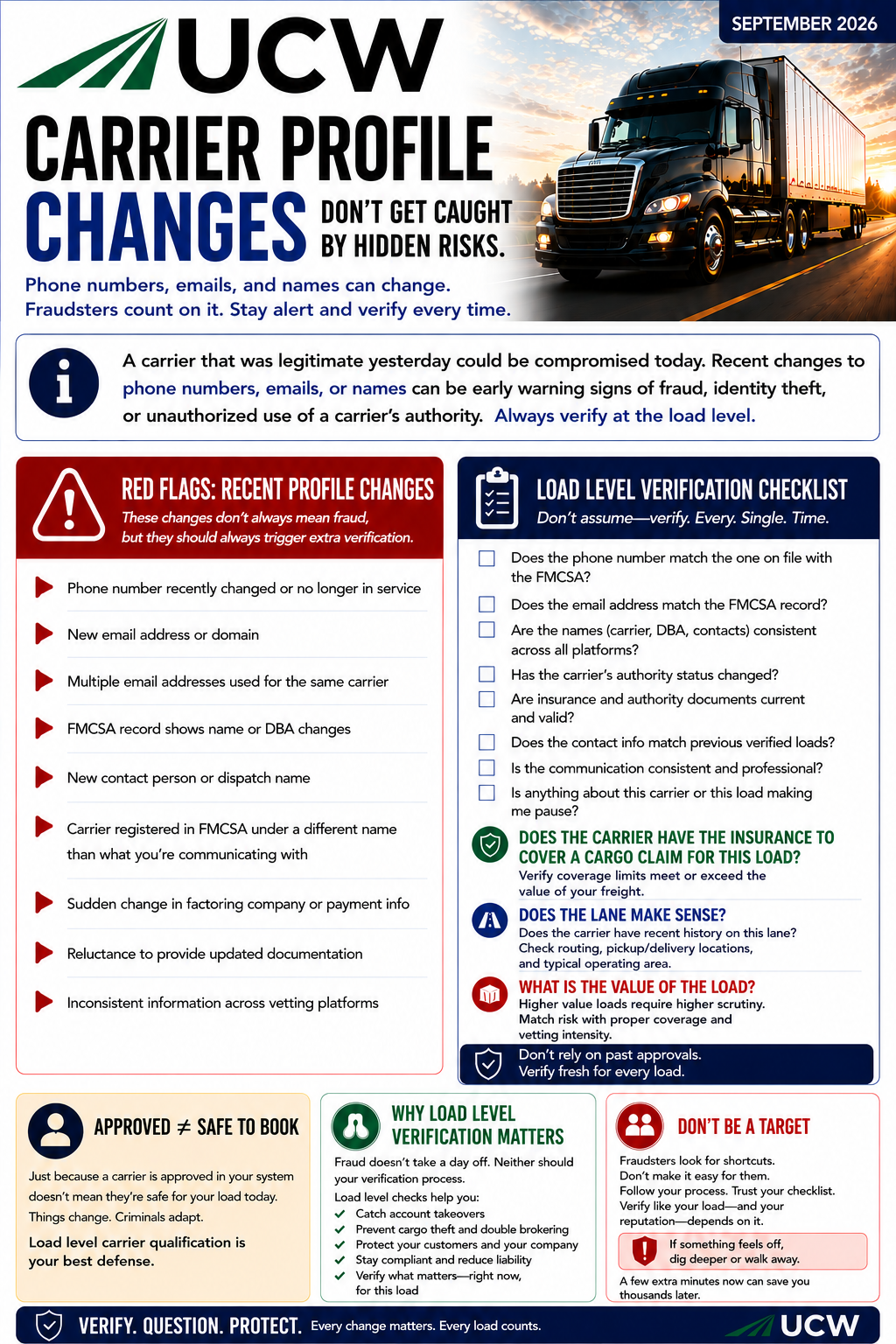
Carrier Profile Changes: Don’t Get Caught By Hidden Risks
In today’s transportation environment, fraudsters are becoming increasingly sophisticated. One of the most common tactics used in carrier fraud, identity theft, and cargo theft schemes involves changes to carrier profile information. A carrier that was legitimate yesterday can become a risk today if key details suddenly change and proper verification steps are skipped.
Updates to phone numbers, email addresses, company names, DBA records, dispatch contacts, or payment information do not automatically indicate fraud. However, they should always trigger additional scrutiny. Criminals often target trusted carriers by impersonating them, taking over accounts, or using altered contact information to gain access to shipments. What appears to be a small administrative update may actually be an early warning sign of a much larger problem.
Red Flags Worth Investigating
When reviewing a carrier profile, pay close attention to:
- Recently changed phone numbers
- New email addresses or unfamiliar email domains
- Multiple email addresses being used for the same carrier
- Name or DBA changes reflected in FMCSA records
- New dispatch contacts or points of communication
- Carriers operating under names that don’t match official records
- Sudden changes to factoring companies or payment information
- Requests to bypass normal verification procedures
- Inconsistent information across vetting platforms
- Reluctance to provide updated documents or insurance information
While any one of these changes may be legitimate, they should never be ignored. The safest approach is to verify first and assume nothing.
Why Load-Level Verification Matters
At UCW Logistics, we believe carrier verification is not a one-time event. Approval status alone does not guarantee a carrier is safe to book on every shipment. Circumstances change, contact information changes, and fraud tactics evolve.
That is why load-level verification remains one of the most effective defenses against fraud. Before every shipment, transportation professionals should confirm:
- Phone numbers match official FMCSA records
- Email addresses are consistent with verified carrier information
- Authority and insurance remain active and valid
- Coverage limits meet the value of the load being transported
- Carrier contacts are consistent across platforms and prior interactions
- The carrier has a history operating the lane and service area
- Documentation is current and authentic
These extra validation steps take only minutes but can prevent costly claims, cargo theft incidents, double brokering situations, and reputational damage.
Don’t Let Familiarity Create Risk
One of the biggest mistakes in carrier compliance is relying solely on previous approvals. Fraudsters count on complacency and rushed decision-making. A carrier that successfully handled a load six months ago should still be verified today. Every shipment presents a new opportunity to identify changes that could expose customers, brokers, and carriers to unnecessary risk.
When something feels off, trust your process. Ask questions, verify information independently, and escalate concerns when needed. A few extra moments of diligence today can save thousands of dollars and significant operational disruption tomorrow.
At UCW Logistics, our commitment remains simple: Verify. Question. Protect. By treating every load as its own verification event, we help protect our customers, carrier partners, and the integrity of the supply chain. Every change matters. Every load counts.