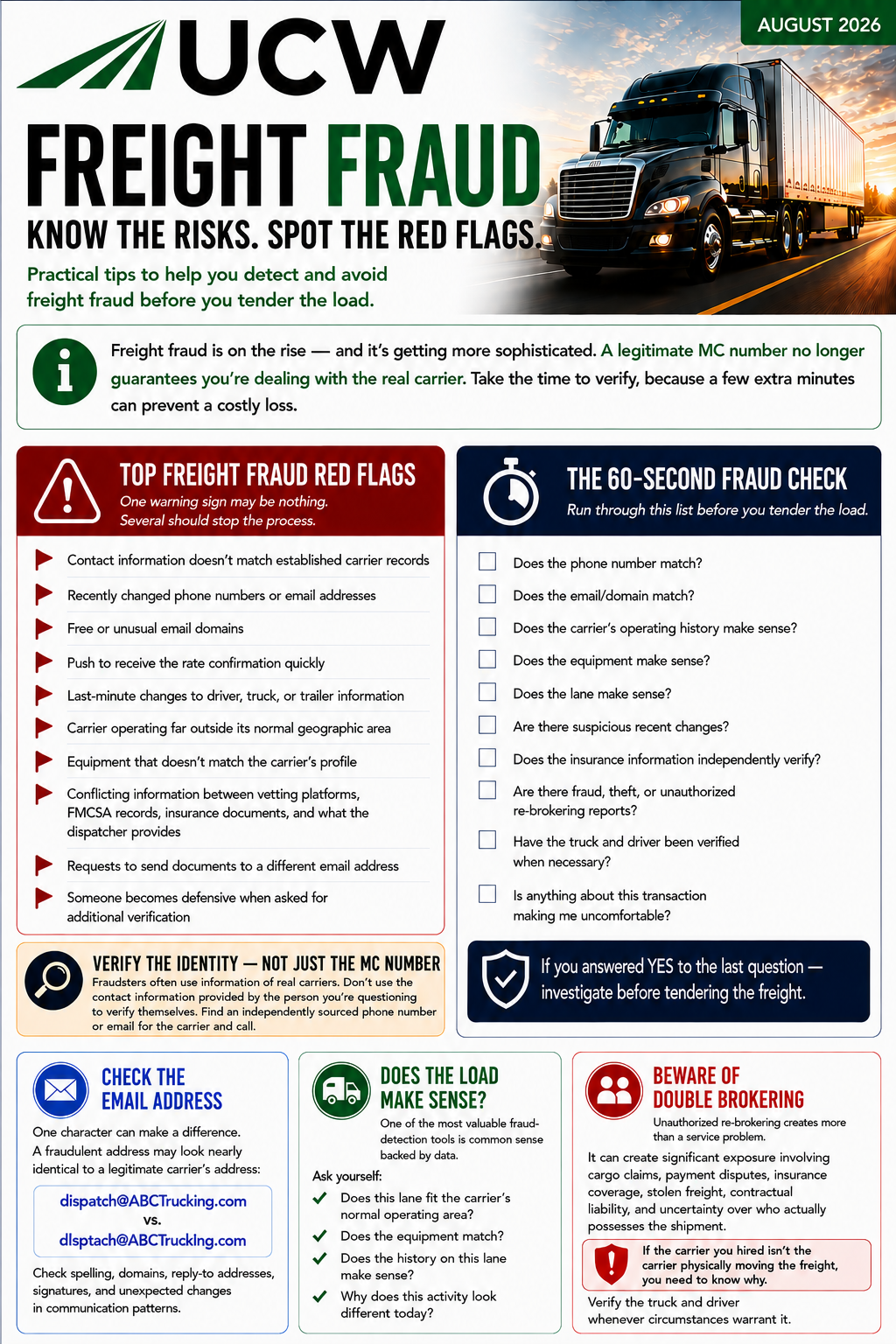
Freight Fraud Is on the Rise: Know the Risks and Spot the Red Flags
The transportation industry continues to face an increasing threat from freight fraud. As fraud schemes become more sophisticated, shippers, brokers, and logistics providers must be more vigilant than ever when vetting carriers and tendering loads.
One of the most dangerous misconceptions in the industry today is that a valid MC number guarantees you are dealing with a legitimate carrier. Unfortunately, that is no longer the case. Fraudsters have become increasingly skilled at impersonating reputable carriers by leveraging publicly available information, creating convincing email addresses, and manipulating contact information to appear legitimate.
The result can be stolen freight, fraudulent payments, insurance complications, disrupted customer service, and significant financial losses.
Common Freight Fraud Red Flags
While any single item may not indicate fraud, multiple warning signs should immediately trigger additional verification steps.
Some of the most common red flags include:
- Contact information that does not match established carrier records
- Recently changed phone numbers or email addresses
- Free or unusual email domains
- Pressure to receive a rate confirmation quickly
- Last-minute changes to driver, truck, or trailer information
- Operating activity that falls outside a carrier’s normal geographic footprint
- Equipment that does not align with the carrier’s typical profile
- Conflicting information between FMCSA records, insurance documents, carrier monitoring platforms, and dispatcher communications
- Requests to send documents to alternate email addresses
- Defensive behavior when additional verification is requested
When several of these factors appear together, it is often a sign that further investigation is warranted before moving forward.
The 60-Second Fraud Check
Before tendering any load, take one minute to run through a simple verification checklist:
- Does the phone number match official carrier records?
- Does the email address and domain match the carrier?
- Does the carrier’s operating history make sense for this shipment?
- Does the equipment fit the load requirements?
- Does the lane align with the carrier’s normal business operations?
- Have there been suspicious or recent changes to contact information?
- Can the insurance information be independently verified?
- Are there any reports of fraud, theft, or unauthorized re-brokering?
- Have the truck and driver been verified when appropriate?
- Is there anything about the transaction that feels unusual?
If the answer to the last question is “yes,” stop and investigate before tendering the freight.
Verify the Identity, Not Just the MC Number
A common tactic among fraudsters is to use information belonging to legitimate carriers. Because of this, relying solely on contact information provided during the tender process can create unnecessary risk.
Instead, independently verify carrier information using trusted sources. Locate contact details through official FMCSA records, carrier websites, or previously established contacts. Call the carrier directly using independently sourced phone numbers and confirm the details of the shipment before proceeding.
Pay Close Attention to Email Addresses
Email fraud often comes down to a single character.
For example, a fraudulent email may look nearly identical to a legitimate carrier email address, differing by only one letter or number. These subtle changes can be easily missed during busy operations.
Always confirm:
- Domain spelling
- Reply-to addresses
- Email signatures
- Communication patterns
- Unexpected changes in contact information
A careful review can prevent a costly mistake.
Beware of Double Brokering
Unauthorized re-brokering remains a significant concern across the transportation industry.
When freight is passed to an unknown third party without authorization, organizations can face increased exposure to cargo claims, payment disputes, insurance complications, freight theft, and uncertainty regarding who is actually transporting the shipment.
If the carrier you hired is not the carrier physically moving the freight, additional verification should be conducted immediately.
Building a Culture of Verification
Freight fraud prevention is not about slowing down operations. It is about making smart decisions that protect customers, carriers, and supply chain partners.
At UCW Logistics, we encourage every transportation professional to make verification a routine part of the load tender process. Taking a few extra minutes to confirm details, validate identities, and investigate concerns can help prevent significant losses and keep freight moving safely and securely.
As fraud tactics continue to evolve, awareness remains one of the most effective tools in protecting the integrity of the supply chain.
Know the risks. Spot the red flags. Verify before you tender.